🔹 Introduction
Solar energy today is one of the fastest-growing and most affordable sources of renewable power worldwide. From homes and small businesses to large-scale solar farms in the desert — the sun is powering a clean-energy revolution.
Solar energy is simply the power we capture from sunlight to produce electricity and heat. Every hour, the sun provides enough energy to fully power the Earth’s electricity demand for a full year — yet we are still harnessing only a small portion.
This blog explains:
✔ What solar energy is
✔ How solar works step-by-step
✔ Types of solar power systems
✔ Key benefits & disadvantages
✔ Future of solar in the USA
✔ Common questions every beginner asks
Let’s begin the journey into the world of solar power 🌍⚡
🔹 What Is Solar Energy?
Solar energy is the radiation emitted by the sun. The Earth receives sunlight in the form of photons, which contain energy. We convert this energy into electricity through a technology called Photovoltaics (PV) — commonly known as solar panels.
🔹 How Solar Energy Works (Step-by-Step Simple Explanation)
| Step | Process |
|---|---|
| 1️⃣ | Sunlight hits the solar panels |
| 2️⃣ | PV cells absorb photons & release electrons |
| 3️⃣ | Electric current (DC) starts flowing |
| 4️⃣ | Inverter converts DC → AC power |
| 5️⃣ | AC power runs home appliances |
| 6️⃣ | Extra energy goes to battery or grid |
Now let’s understand each step deeply…
🔸 Step 1: The Solar Panels Capture Sunlight
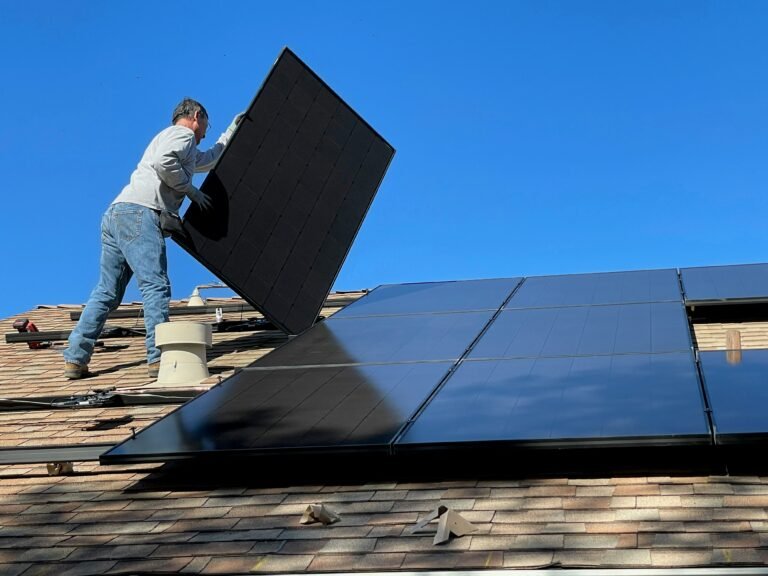
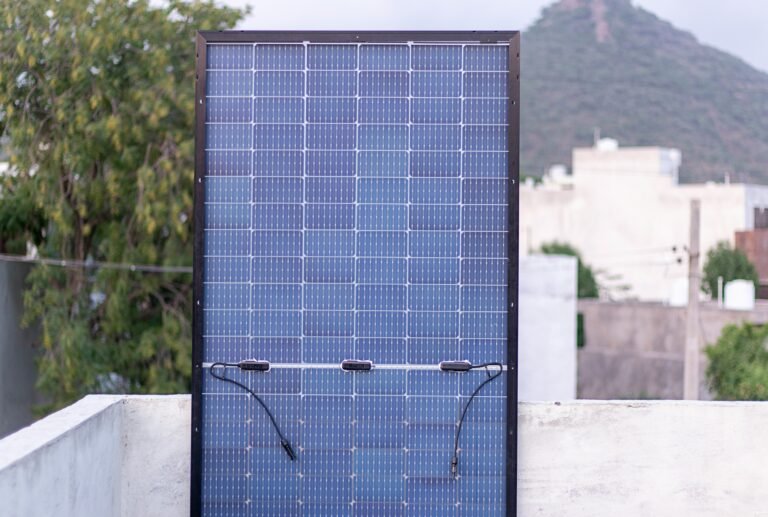
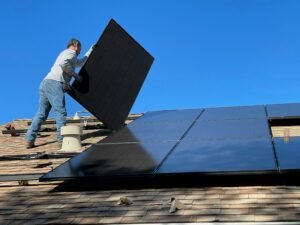
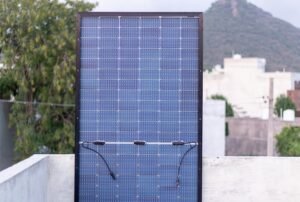
A solar panel is made of many solar cells — usually silicon material. They work using the photovoltaic effect, where sunlight triggers the movement of electrons.
Solar cells are combined together on rooftops or ground-mount systems to absorb maximum sunlight.
🔸 Step 2: Electron Movement Creates Power
When sunlight strikes the panel:
⚡ Electrons inside silicon get excited
⚡ They break free and start flowing
⚡ Flow of electrons = Electricity
This electricity is Direct Current (DC).
🔸 Step 3: Inverter Converts DC to AC
Your home appliances run on AC power, not DC.
So an inverter changes DC → AC.
There are three types of inverters:
- String Inverter (most common & economical)
- Microinverters (panel-level conversion, high efficiency)
- Hybrid Inverter (supports grid + battery)
🔸 Step 4: Power Distribution in the Home
Once AC power is ready:
👉 It goes to your main service panel
👉 Then powers lights, TVs, AC units, etc.
If solar produces more power than consumed:
- It is stored in batteries, or
- Exported to the grid for bill credits (net metering)
🟦 Solar Power System Components
| Component | Function |
|---|---|
| Solar Panels | Generate DC electricity |
| Inverter | Converts DC → AC |
| Mounting Structure | Holds panels in place |
| Wiring & Safety Devices | Safe electrical flow |
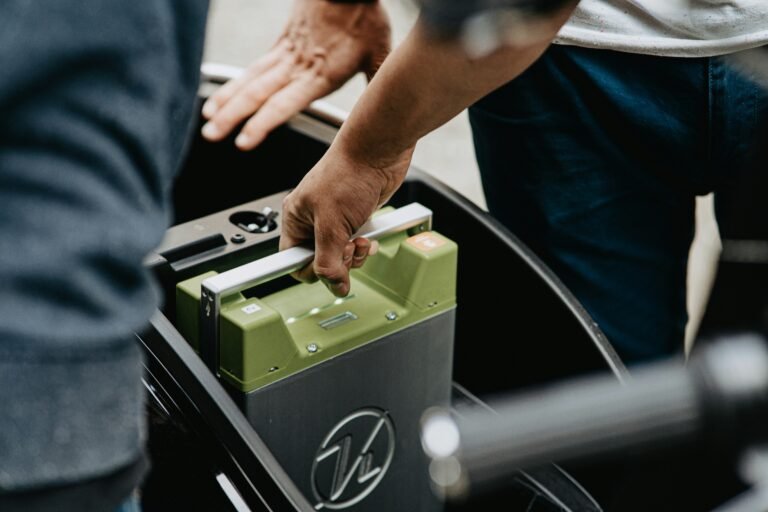
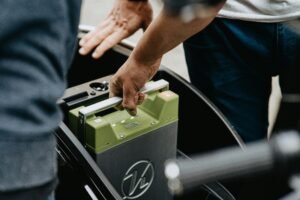
| Battery (Optional) | Store excess energy |
| Monitoring System | Tracks performance |
🔹 Types of Solar Energy Systems
1️⃣ On-Grid Solar System
✔ Connected to utility grid
✔ Cheapest option
✔ Net metering available
❌ No power if grid goes OFF (no batteries)
Perfect for: Homes with reliable grid power
2️⃣ Off-Grid Solar System
✔ Completely independent from utility grid
✔ Works anywhere — remote areas
❌ Expensive due to batteries
Perfect for: Farms, cabins, areas without electricity
3️⃣ Hybrid Solar System
✔ Uses both grid + batteries
✔ Power backup during outages
❌ Higher upfront cost
Perfect for: Homes needing backup power
🔹 Types of Solar Panels
| Type | Efficiency | Cost | Best For |
|---|---|---|---|
| Monocrystalline | High | Expensive | Limited roof space |
| Polycrystalline | Medium | Affordable | Large roofs |
| Thin-Film | Low | Cheap | Commercial / Industrial |
🔹 Solar Energy Advantages
| Benefit | Explanation |
|---|---|
| ♻ Renewable | Sunlight is unlimited |
| 🌍 Eco-Friendly | No air pollution |
| 💡 Lower Bills | Saves electricity cost |
| 🏡 Increases Home Value | Buyers love solar homes |
| 🔌 Energy Independence | Reduced reliance on grid |
| ⚙ Low Maintenance | Long lifespan ~25 years |
🔹 Solar Energy Disadvantages
| Drawback | Solution |
|---|---|
| Weather Dependence | Add battery storage |
| High Upfront Cost | Tax credits & financing |
| Roof/Space Requirement | Use high-efficiency monocrystalline panels |
Solar technology continues improving — reducing these drawbacks yearly.
🔹 Solar Efficiency — Why It Matters
Higher efficiency = More power from fewer panels.
Today panel efficiency ranges around:
✨ 18% – 23% for residential homes
Factors affecting efficiency:
☀ Panel direction
📐 Installation angle
🌳 Shading
🔧 Panel temperature & quality
🧼 Dirt / dust
🔹 Solar Power in the USA — 2025 Outlook
The USA is among the fastest-growing solar markets.
✔ Millions of homes already powered by solar
✔ Strong government incentives
✔ Solar farm development in multiple states
✔ Rapid job & economy growth in renewable industry
By 2035, experts predict most new U.S. electricity will be solar-powered.
🔹 Does Solar Work in Cloudy Areas?
Yes! Solar still works in:
☁ Cloudy weather
❄ Snowy areas
🌧 Light rain
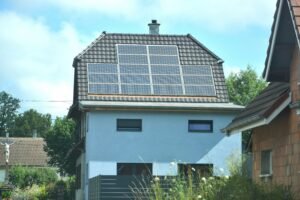
It produces less, but not zero. Countries like Germany — with much lower sunlight — rank among top solar users.
🔹 Solar & Battery = 24/7 Power
Batteries solve the biggest issue of solar: night-time power.
Popular battery brands:
- Tesla Powerwall
- LG Chem
- Enphase
You can run essentials during outages:
🔹 Refrigerator
🔹 Wi-Fi
🔹 Fans
🔹 Lights
🔹 Medical devices
🔹 Solar Energy Maintenance
Very low maintenance:
- Cleaning 2–3 times a year
- Annual inspection
- Inverter check every 5–10 years
Solar panels have 25–30 years performance warranty.
🔹 Cost of Solar Installation (General Idea)
Cost depends on:
🔸 Location
🔸 System size
🔸 Panel type
🔸 Roof complexity
🔸 Incentives available
We will cover state-by-state pricing in Blog #7 (as per your list).
🔹 Who Should Go Solar?
Perfect for homeowners who:
✔ Want lower bills
✔ Want long-term investment benefits
✔ Have good sunlight exposure
✔ Plan to stay in the home for years
🔶 Frequently Asked Questions
Q1: Do solar panels work at night?
No — they need sunlight. Batteries provide night-time power.
Q2: Can solar power run ACs and heaters?
Yes — if system size is right.
Q3: What happens when it rains?
Solar still produces some energy — rain also helps clean panels.
Q4: Do solar panels damage the roof?
No — professional installation actually protects the roof.
🏁 Conclusion
Solar energy is more than just a trend — it’s the future of clean power.
It helps reduce electricity bills, increase home value, and protect the planet.
Whether you choose on-grid, off-grid, or hybrid — there is a solar solution available for every American home.
🌞 Switch to solar now, and power your home with the energy of the sun! ⚡