

Introduction: Planning Your Solar Journey
Going solar is one of the smartest financial investments for American homeowners. It reduces monthly power bills, increases home value, and provides long-term energy independence. But many people feel confused:
💬 How does solar installation actually happen?
💬 What are the steps before panels get on the roof?
💬 Who handles permits, inspections, and utility approval?
This detailed guide explains the entire solar installation process from the first phone call to the day your system powers your home.
Whether you’re installing solar for lower bills or for backup during outages — this step-by-step guide ensures you know exactly what to expect.
📌 10 Major Steps of Solar Installation Process
| Step | Stage | Time Required |
|---|---|---|
| 1️⃣ | Initial Consultation & Evaluation | 1–2 Days |
| 2️⃣ | Home & Roof Inspection | 1 Day |
| 3️⃣ | Solar System Design & Proposal | 3–7 Days |
| 4️⃣ | Financing & Contract Signing | 1–3 Days |
| 5️⃣ | Permits & Approvals | 2–6 Weeks |
| 6️⃣ | Installation Day | 4–10 Hours |
| 7️⃣ | City/County Inspection | 3–10 Days |
| 8️⃣ | Utility Interconnection Approval | 1–3 Weeks |
| 9️⃣ | System Activation (PTO) | Same Day |
| 🔟 | Monitoring & Maintenance | Continuous |
Let’s break down each stage for a clear understanding.
Step 1️⃣: Consultation & Solar Evaluation
This is where everything begins.
Your solar provider will:
✔ Check electricity bills (to size the system)
✔ Ask goal: lower bills? backup power?
✔ Online satellite check for roof & shading
✔ See if solar qualifies for your home
You receive:
📌 Estimated savings
📌 System size recommendation
📌 Early cost quotes
Pro Tip:
Provide last 12 months power bills for accurate design.
Step 2️⃣: Home & Roof Physical Inspection
A solar technician visits your home to check:
🔹 Roof age & material (shingle, metal, tile)
🔹 Roof direction (south = best sunlight)
🔹 Shading from trees/chimneys
🔹 Electrical panel capacity
🔹 Attic wiring & roof structure
If the roof needs repair → better to fix before installation.
Rule: Roof should have 15+ years of life left.
Step 3️⃣: System Design & Final Proposal
Engineers create a custom design that shows:
📍 Solar panel layout on your roof
⚡ Expected yearly production
⏳ Payback period
💰 Incentives (Federal 30% Tax Credit)
🔋 Battery recommendations (optional)
You get final pricing and plan approval.
Design Software Often Used:
- Aurora Solar
- Helioscope
- PVsyst
You approve → work moves forward.
Step 4️⃣: Financing & Contract Signing
Homeowners can choose:
| Option | Upfront Cost | Monthly Savings | Ownership |
|---|---|---|---|
| Cash Purchase | High | Highest | You own |
| Solar Loan | Low/Zero | Great | You own |
| Lease/PPA | Zero | Moderate | Company owns |
Owning solar → best for long-term savings + resale value.
Federal Incentive 🎁
📌 30% Solar Tax Credit (ITC) applies for owners
Step 5️⃣: Permits & Paperwork
Your solar provider handles:
✔ Local permits
✔ Utility paperwork
✔ Net metering approval
✔ HOA documentation (if needed)
This step takes longest —
because cities & utilities approve everything one-by-one.
Time Frame: 2–6 weeks depending on the state.
Good news:
You don’t lift a finger — solar company does all paperwork.
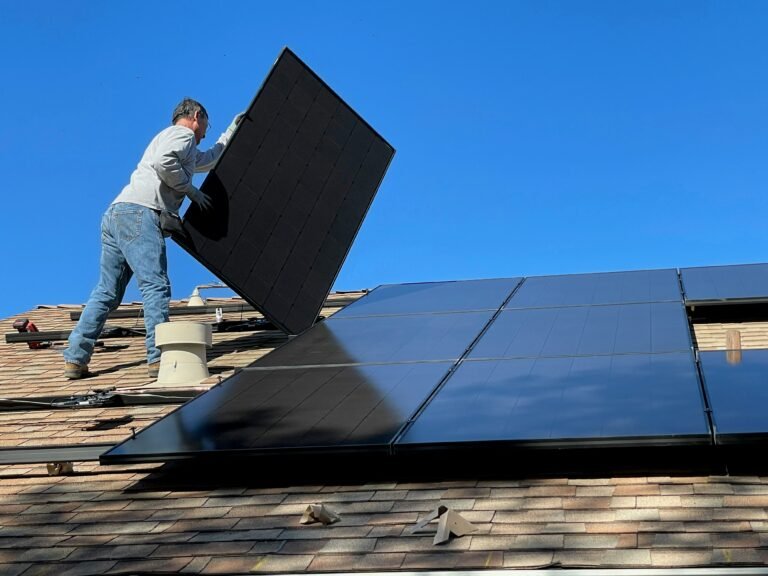
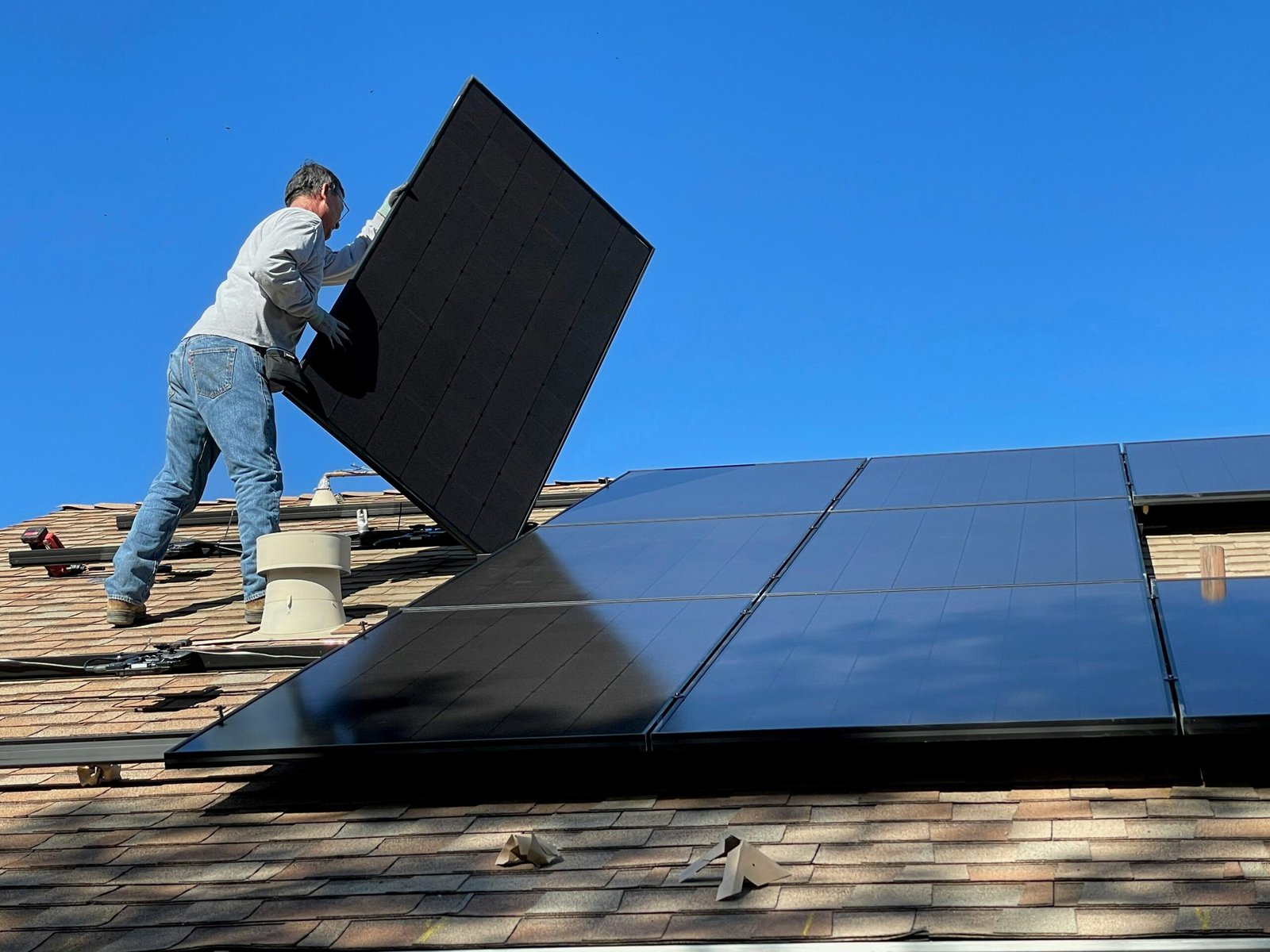
Step 6️⃣: Solar Panel Installation Day
Finally — the exciting part! ⚡
Typical installation team:
👷♂️ 3–5 technicians
What they do:
🔧 Install mounting hardware
🔋 Place solar panels
🔌 Wire inverter + conduit
📟 Setup system monitoring
🧲 Safety checks
Installation time:
📌 4–10 hours for most rooftops
After installation, system waits for inspections.
Step 7️⃣: Final Inspection (City/County)
A government inspector checks:
✔ Wiring safety
✔ Roof structure stability
✔ Code compliance
✔ Inverter and breaker setup
This ensures everything meets USA electrical standards.
Step 8️⃣: Utility Interconnection & Net Metering
Your utility company installs:
📌 Bi-directional meter
(to record power sent/exported)
Once approved → PTO granted
(“Permission to Operate”)
You can now run your home on sunshine power 🌞
Step 9️⃣: System Activation 🎉
The solar company:
✔ Turns on your system
✔ Enables smartphone app monitoring
✔ Gives performance/troubleshooting guide
Now you’re officially energy independent! 🔥
Step 🔟: Maintenance & Monitoring
Solar has very low maintenance:
🧽 Clean panels 2–3 times a year
🔧 Annual technician check
📲 Monitor performance via app
Solar panel lifespan:
📌 25–40 Years
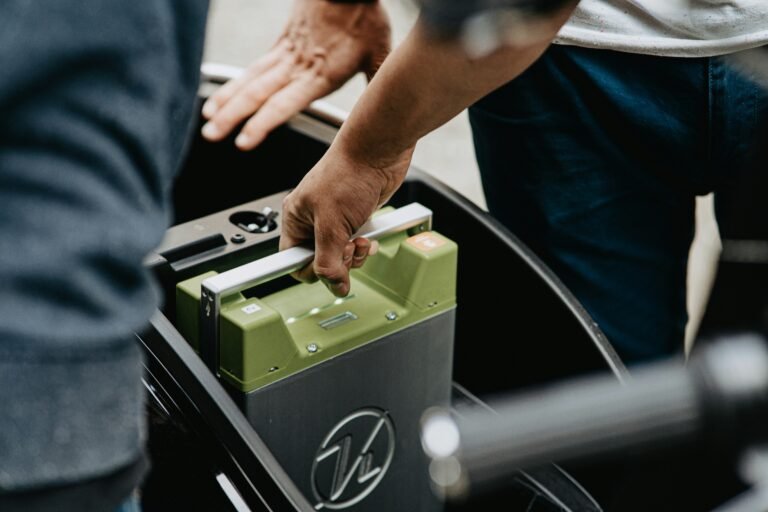
🔋 Optional: Battery Installation Process
Batteries require:
🧱 Wall space (garage or utility room)
⚡ Additional wiring
🪫 Backup load panel (optional)
Benefits:
✔ Power during grid outages
✔ Use stored solar at night
✔ Higher bill savings (TOU rates)
Best Battery Brands:
⭐ Tesla Powerwall
⭐ Enphase
⭐ Panasonic EverVolt
💰 Solar Installation Cost Breakdown (USA 2025)
| System Type | Avg. Cost Before Credit | After 30% Credit |
|---|---|---|
| 5kW | $16,000 | $11,200 |
| 6kW | $19,500 | $13,650 |
| 8kW | $25,500 | $17,850 |
Factors affecting cost:
✔ Roof type
✔ Brand of panels 🥇
✔ State / city labor pricing
✔ Electrical upgrade needs
✔ Battery add-on
🧮 Savings & Payback: How Much Will You Save?
Average USA solar payback:
⏳ 5–8 years
Lifetime savings:
💰 $25,000–$65,000+
States with highest electricity savings:
🔥 California, New York, New Jersey, Massachusetts, Connecticut, Texas
🌍 Environmental Benefits
Each solar home reduces:
✔ 3–4 tons CO₂ per year
✔ Pollution equivalent to planting 60+ trees yearly
Solar = Clean future for families 🌱
🔎 Choosing the Right Solar Installer
Look for installers offering:
✔ NABCEP-certified professionals
✔ 25-year workmanship warranty
✔ Panel-level output monitoring
✔ Transparent pricing
✔ Local experience
Best practice:
📌 Compare 2–3 installers before selecting
❓ Frequently Asked Questions
Q1: Will my roof handle solar?
Yes — most U.S. rooftops qualify. A structural check ensures safety.
Q2: What if I move to another home?
Owned systems increase home value — buyers pay more for solar homes.
Q3: Will solar work during a blackout?
Only if you have a battery — grid-tied systems go off for safety.
Q4: Is solar noisy?
No — panels are silent. Inverters create minimal humming only.
Q5: Can solar reduce my bill to $0?
Yes — with proper system size + net metering.