

INTRODUCTION
Solar power is becoming the No.1 choice for homeowners worldwide due to rising electricity prices, better solar technology, and increased awareness of clean energy. But before installing a solar system, one important question confuses almost everyone:
👉 Should I install an On-Grid, Off-Grid, or Hybrid solar system?
Each system has different functions, costs, advantages, and ideal use cases.
This guide will explain everything in simple, practical, and beginner-friendly language so you can confidently choose the best solar system for your home in 2025.
1. What Is a Solar System? (Simple Explanation)
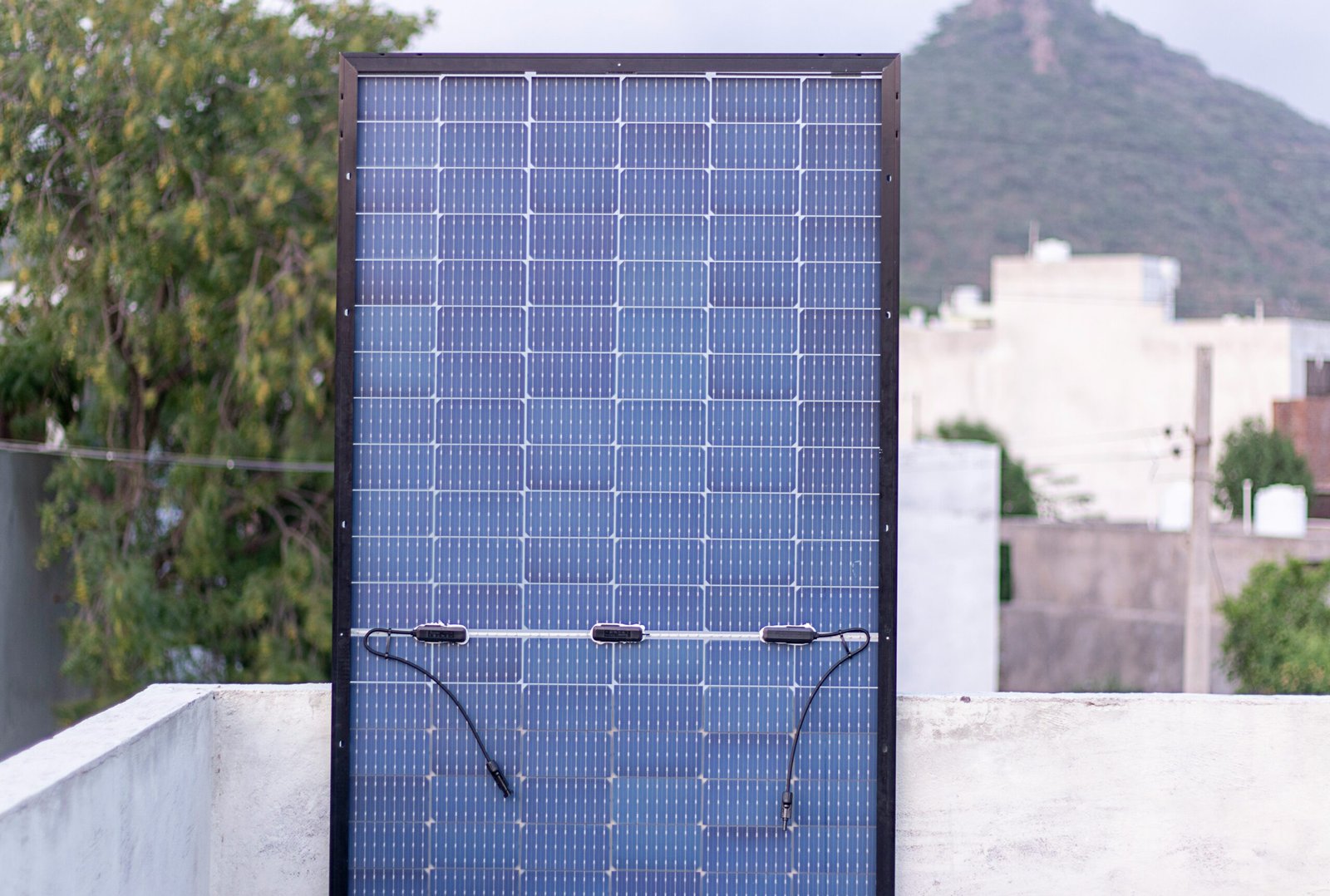
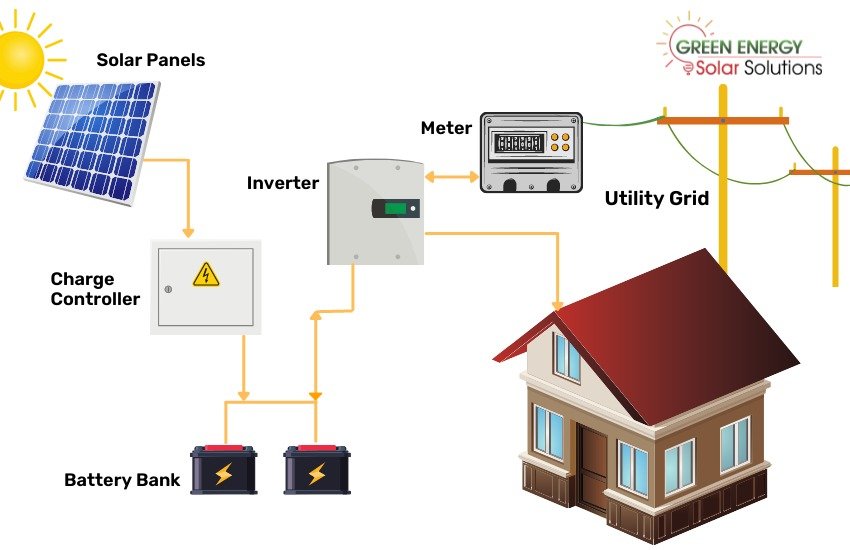
A solar system converts sunlight into electricity using:
- Solar panels
- Inverter
- Batteries (optional)
- Mounting structure
- Charge controller
- Wiring & protections
But the type of system depends on whether it uses batteries and whether it connects to the national grid.
There are three main types:
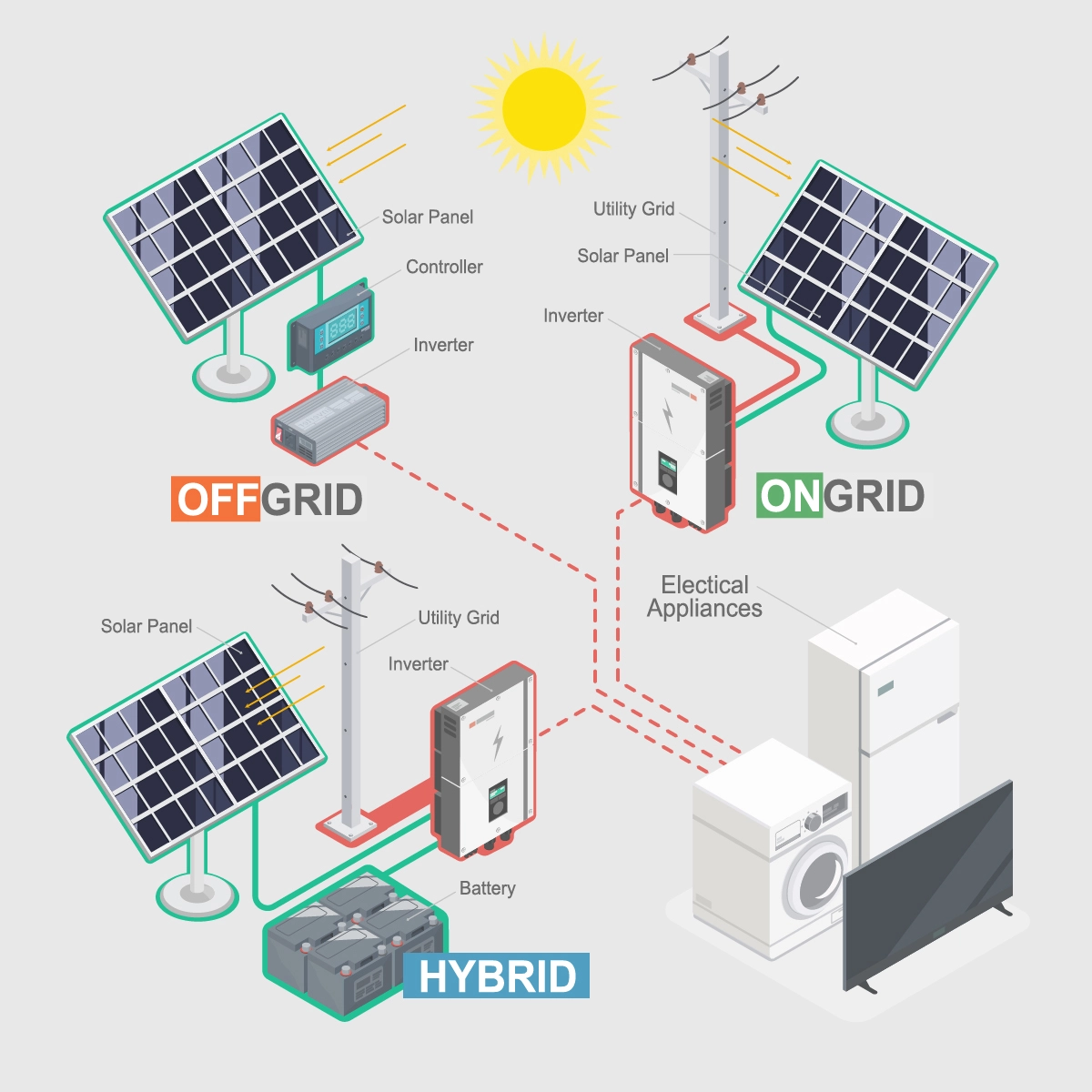
- On-Grid (Grid-Tied)
- Off-Grid (Battery Based)
- Hybrid (Both Grid + Battery)
Let’s explore all three in detail.
2. On-Grid Solar System (Grid-Tied)

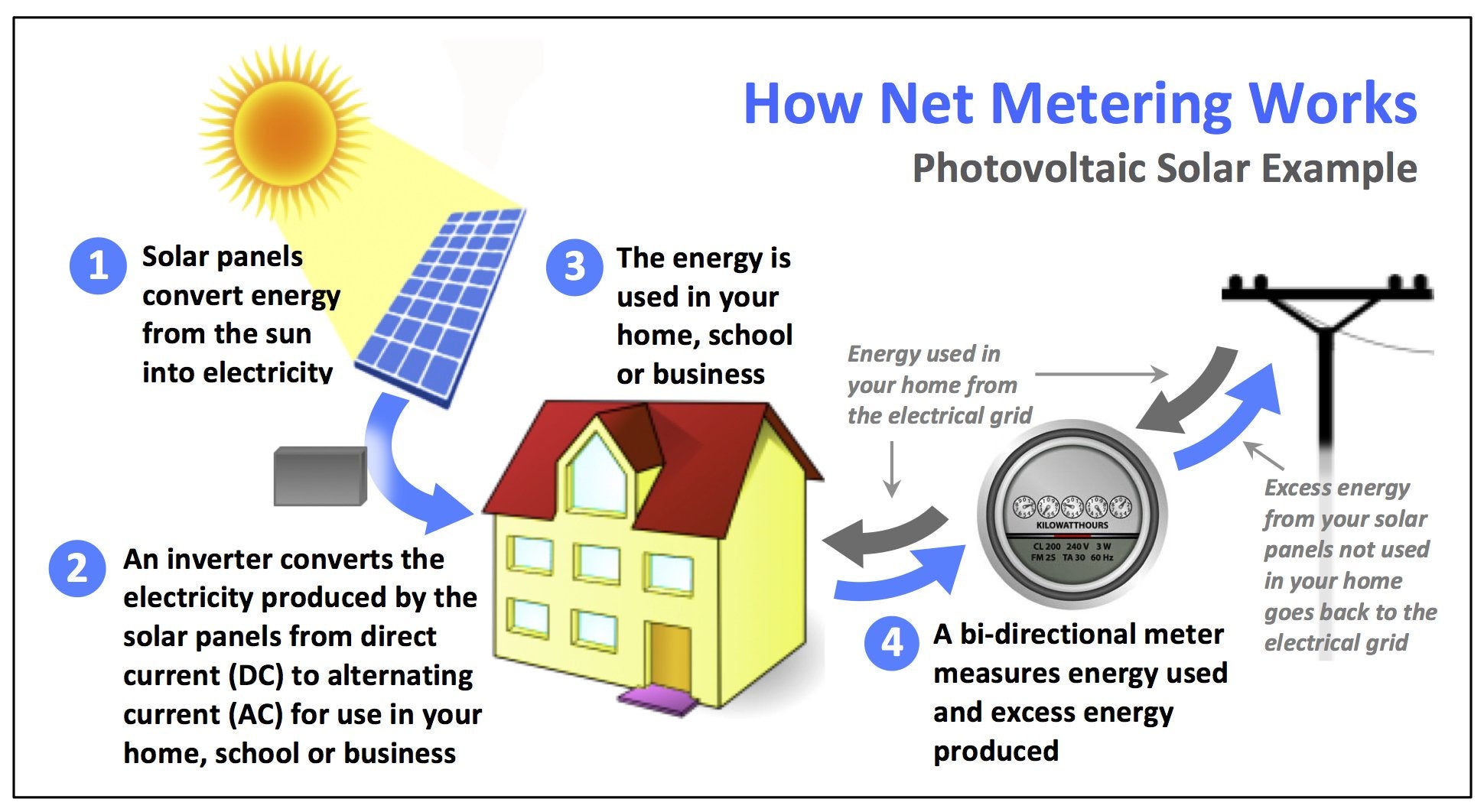

An On-Grid system connects directly to the national electricity grid.
It does not need batteries.
How It Works
- Solar panels generate electricity.
- Home uses solar power first.
- Extra electricity goes to the grid via net metering.
- When solar is not enough, grid supplies power.
Advantages of On-Grid System
1. Lowest Cost
Cheapest solar setup because no batteries are required.
2. Net Metering Benefit
Excess solar power goes back to the grid and reduces electricity bill.
3. High Efficiency
All power produced is used immediately.
4. Easy Maintenance
No battery = fewer components to manage.
Disadvantages of On-Grid System
❌ No Backup During Loadshedding
If grid fails → system turns OFF (safety feature).
❌ Depends on Government Approval
Net metering requires approval & meter installation.
Best For:
✔ Homes with reliable grid electricity
✔ People wanting low-cost installation
✔ Those with high electricity bills
✔ Areas with net-metering support
3. Off-Grid Solar System (Battery Based)


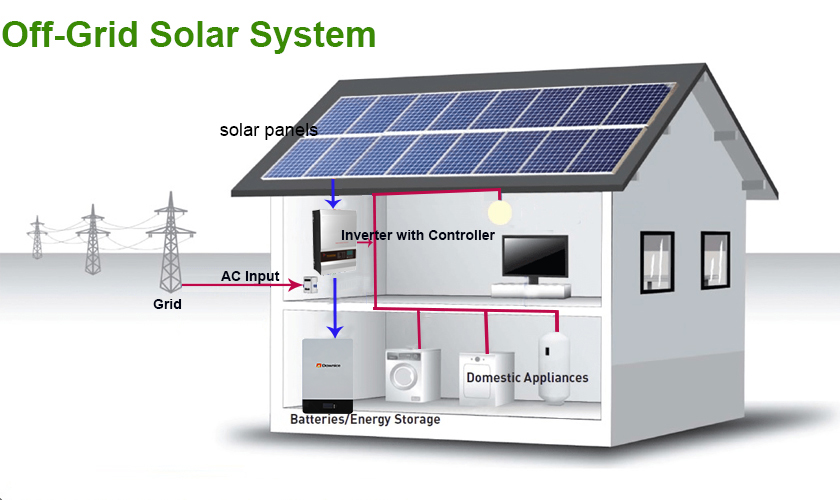
An Off-Grid system works completely independent of the national grid.
It requires batteries to store power.
How It Works
- Solar panels generate electricity.
- Batteries store energy for night-time use.
- Inverter supplies power from battery to home.
- System runs even without grid electricity.
Advantages of Off-Grid System
1. Works Without Grid
Perfect for remote areas.
2. No Loadshedding Ever
Battery backup ensures 24/7 electricity.
3. Complete Energy Independence
No need for government or utility approval.
Disadvantages of Off-Grid System
❌ More Expensive
Batteries increase cost significantly.
❌ Battery Replacement Needed
Lead-acid: 3–5 years
Lithium: 8–12 years
❌ Limited Power
Large appliances (AC, iron, geyser) may require bigger systems.
Best For:
✔ Villages & remote locations
✔ Homes with frequent power outages
✔ People wanting full energy independence
✔ Areas without net metering
4. Hybrid Solar System (Best of Both Worlds)
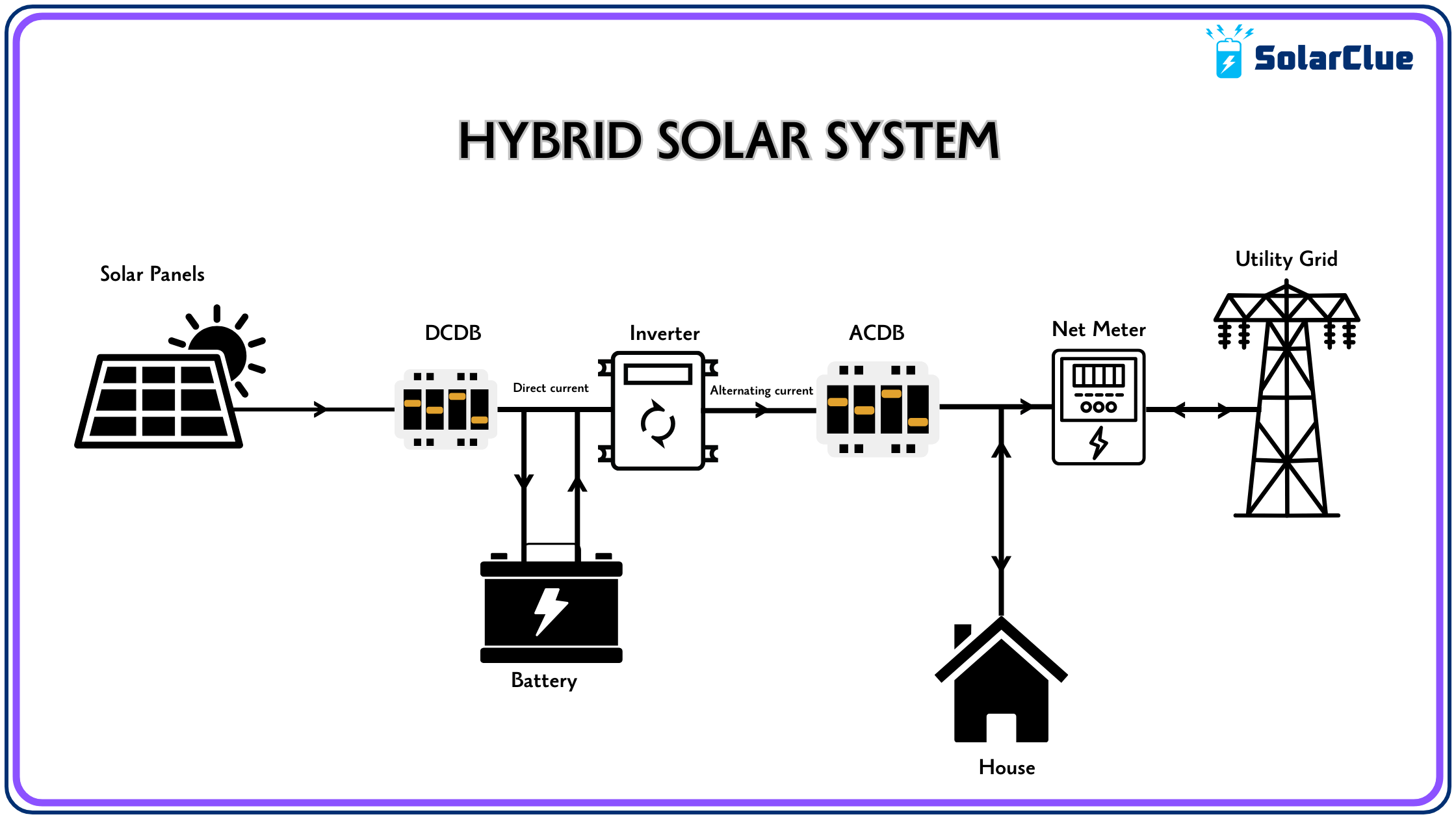
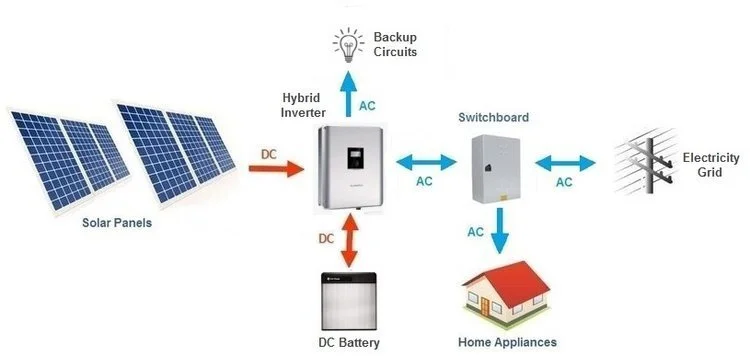
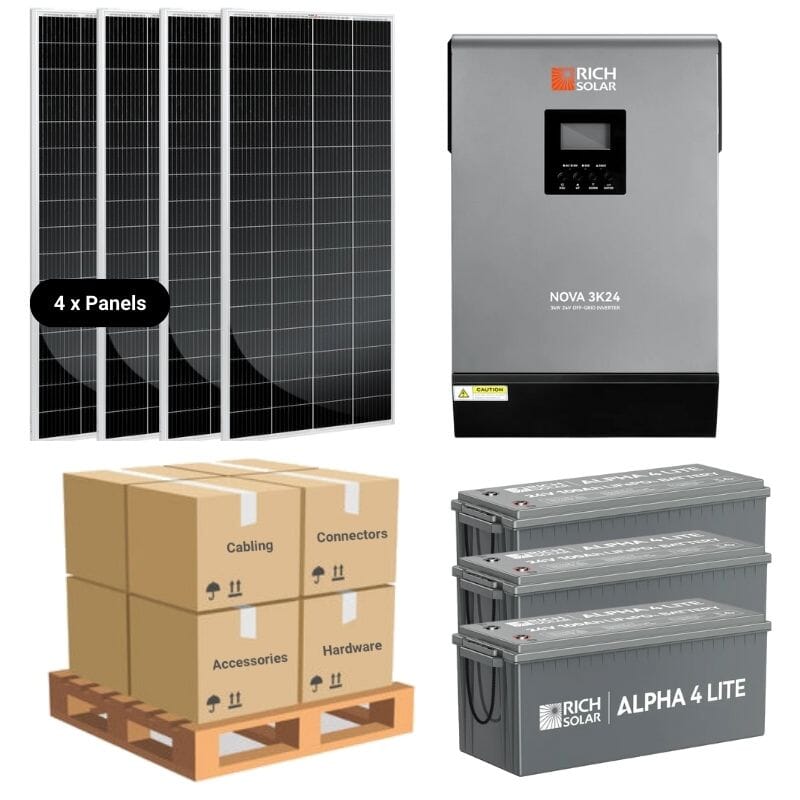
A Hybrid system combines On-Grid + Battery Backup.
This is the most advanced and most flexible solar option in 2025.
How It Works
- Solar powers home
- Excess power charges batteries
- Extra power goes to the grid
- During night or outage → battery backup works
Advantages of Hybrid System
1. Works Even During Loadshedding
You always have backup power.
2. Net Metering + Battery Backup
Best financial benefit + zero outage worry.
3. Smart Energy Management
AI-based hybrid inverters optimize usage.
4. Long-Term Investment
Most future-proof system.
Disadvantages of Hybrid System
❌ Most Expensive Solar System
Batteries + advanced inverter increase cost.
❌ More Components
Slightly more complex installation.
Best For:
✔ Homes with frequent load shedding
✔ Families needing backup + low bills
✔ Offices & shops
✔ Premium solar installations
5. Detailed Comparison Table (2025)
| Feature | On-Grid | Off-Grid | Hybrid |
|---|---|---|---|
| Battery Required? | ❌ No | ✔ Yes | ✔ Yes |
| Loadshedding Backup | ❌ No | ✔ Yes | ✔ Yes |
| Net Metering | ✔ Yes | ❌ No | ✔ Yes |
| Cost | Lowest | Medium | Highest |
| Ideal For | City homes | Villages | Homes needing backup |
| Maintenance | Low | Medium | Medium |
| Energy Independence | Low | High | Medium-High |
| Night-Time Use | Grid | Battery | Battery + Grid |
6. Which Solar System Is Best for You? (Simple Decision Guide)

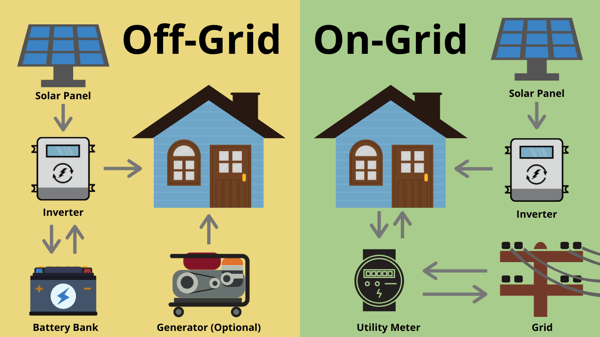

Choose ON-GRID if:
- You want the cheapest solar option
- You have stable electricity
- You want net metering savings
- You do NOT need backup
✔ Best for city homes
✔ Best for reducing high electricity bills
Choose OFF-GRID if:
- You live in a remote location
- You face frequent outages
- You want full independence
- You don’t care about net metering
✔ Best for rural areas
✔ Best for places with no grid
Choose HYBRID if:
- You want backup + bill reduction
- You want net metering
- You live in an area with loadshedding
- You want a future-proof system
✔ Best for premium homes
✔ Best for offices
✔ Best overall system in 2025
7. Cost Comparison (Approximate—May Vary by Country)
On-Grid
💲 Cheapest
NO battery needed
Low installation cost
Off-Grid
💲💲 Medium
Battery cost included
More durable components
Hybrid
💲💲💲 Highest
Battery + hybrid inverter
Maximum features
8. Which System Saves the Most Money?
Highest Savings:
👉 On-Grid & Hybrid (with net metering)
No Savings:
👉 Off-Grid (no net metering available)
But Off-Grid gives maximum independence.
9. Lifespan of Each System
- Solar Panels: 25–30 years
- Inverters: 8–12 years
- Lead-Acid Batteries: 3–5 years
- Lithium Batteries: 8–12 years
Hybrid systems last longest due to smart load management.
10. Final Recommendation (2025)
✔ Best Overall System:
Hybrid Solar System
→ Backup + Net Metering + Highest Savings
✔ Best Budget System:
On-Grid Solar System
→ Lowest price + Maximum bill reduction
✔ Best for Remote Areas:
Off-Grid Solar System
→ Full energy independence
Conclusion
Choosing between On-Grid, Off-Grid, and Hybrid depends entirely on your electricity situation, budget, and daily needs. In 2025, hybrid systems are becoming the most popular choice due to backup + savings + reliability.
No matter which system you choose, solar energy is a long-term investment that reduces bills, increases property value, and provides clean energy for decades.